
Standard vs. Custom: Making the Right Call
Off-the-shelf precision positioning stages deliver exceptional cost-performance ratios for the vast majority of applications. Standardized products benefit from optimized manufacturing workflows, inventory availability, and decades of field-proven reliability. For many R&D labs, educational institutions, and volume production lines, a standard XY or linear stage is simply the right answer — and there is no reason to pay more for customization when a catalog product fits the need.
However, in the fast-evolving landscape of high-end equipment development — particularly in semiconductor inspection, advanced photonics, medical imaging, industrial automation, and aerospace metrology — a significant proportion of projects encounter constraints that standard products simply cannot accommodate. When equipment integration engineers are designing a next-generation machine, the positioning stage is not an isolated component; it must fit into an intricate system with exacting spatial, mechanical, electrical, and environmental demands.
This is precisely where custom precision positioning stages become a strategic necessity rather than a luxury. The question is not whether customization adds value — it clearly does in the right context — but rather: how do you identify when your project truly requires a custom solution, and how do you navigate the custom development process efficiently?
At NATSU PRECISION TRADE LIMITED, we have supported equipment R&D teams and non-standard procurement projects across the globe since 2018. This guide draws on our experience to help you make an informed, cost-effective decision.
- Standard Stage: Budget-sensitive projects, standard travel & load, catalog interfaces, rapid deployment needed
- Custom Stage: Space-constrained integration, special motion profiles, non-standard interfaces, cleanroom or vacuum environments
- Key Driver: Total cost of ownership — not just unit price — including integration, rework, and time-to-market
When Standard Products Cannot Satisfy Your Requirements
As an equipment integration engineer or non-standard project procurement specialist, you will inevitably encounter scenarios where the catalog simply runs out. Here are the four critical categories that most reliably indicate a custom stage is the right path forward.
① Special Dimensions & Confined Installation Spaces
Modern equipment design increasingly pushes components into tight spatial envelopes. Whether you are integrating a positioning stage into a compact wafer inspection tool, a handheld medical diagnostic device, or a densely packed multi-station automation cell, standard stage footprints often do not fit.
Custom stages can be designed with non-standard platform sizes, reduced height profiles, asymmetric mounting geometries, and custom cable routing paths that maintain mechanical integrity within your specific installation envelope. We have produced stages with footprints as small as 30×30mm and bespoke profile heights tailored to millimeter-level space constraints. Critically, dimensional customization does not require sacrificing precision — our custom miniature stages achieve sub-micron repeatability in highly compact forms.
② Special Load Capacity & Non-Standard Travel Range
Standard precision stages are optimized for a predefined load-travel matrix. The moment your application requires load capacities beyond catalog limits — such as staging a heavy optical assembly or carrying sensitive instruments with eccentric weight distribution — or needs travel ranges that do not match standard 25mm, 50mm, 100mm, 150mm, or 200mm increments, you face a critical mismatch.
Custom stages engineered for high payload accuracy incorporate optimized guide rail geometry, enhanced preload configurations, and motor sizing tailored to your dynamic requirements. For applications needing non-standard travel — say 170mm, 340mm, or any intermediate dimension — custom leadscrew or linear motor configurations deliver the exact stroke without wasteful over-engineering that drives up cost and footprint.
③ Special Interfaces, Cable Routing & Environment Requirements
Equipment integration teams frequently encounter interface mismatches: connectors positioned on the wrong face, cable exit directions that conflict with nearby subassemblies, or encoder feedback types incompatible with the system controller. Standard stages assume generic integration; custom stages are designed around your system architecture.
Beyond mechanical interfaces, environmental specifications drive many customization requests. Cleanroom-compatible stages require low particle emission materials, sealed linear guides, and specialized lubricants. Vacuum-compatible versions demand outgassing-qualified components and vacuum-safe cabling. High-temperature environments may require ceramic or stainless steel construction. Each of these is straightforward when specified at the design stage — and prohibitively difficult to retrofit onto a standard product.
④ Multi-Axis Non-Standard Combination Platforms
Many high-end applications require motion in three, four, five, or six degrees of freedom. Standard multi-axis combinations — XY, XYZ, XYθ — are cataloged, but the specific stacking order, axis orientation, combined load rating, and integrated cable management of your application may not match any available configuration.
Custom multi-axis platforms allow engineers to specify arbitrary axis combinations, define the precise zero-position relationship between axes, integrate tip-tilt or rotation stages into a unified structure, and specify a single cable bundle output optimized for routing in the host machine. The result is a mechanically and electrically unified subassembly that integrates into your equipment as cleanly as a purpose-built component — because it is.
Standard vs. Custom: Head-to-Head Comparison
| Evaluation Dimension | 📦 Off-the-Shelf Standard Stage | ⚙ NATSU Custom Precision Stage |
|---|---|---|
| Unit Cost | ✓ Lower upfront cost | Higher unit cost — offset by integration savings |
| Delivery Speed | ✓ In-stock, days to weeks | 3–8 weeks depending on complexity |
| Dimensional Fit | ✗ Fixed catalog sizes only | ✓ Any dimension, profile, and footprint |
| Load & Travel | ✗ Catalog increments only | ✓ Engineered to exact specification |
| Interface / Cable Exit | ✗ Fixed connector type and position | ✓ Fully specified by customer |
| Cleanroom / Vacuum | ✗ Special versions limited | ✓ Designed-in from day one |
| Multi-Axis Config | ✗ Standard XY / XYZ only | ✓ Any combination, any orientation |
| System Integration Effort | ✗ Potential for significant rework | ✓ Drop-in integration, minimal rework |
| Total Cost of Ownership | Varies — may be higher when rework is factored | ✓ Optimized when spec is well-defined |
From Requirement to Precision Delivery: Our 6-Step Custom Process
Our custom development workflow is engineered for efficiency, transparency, and technical rigor. We have refined this process over hundreds of custom projects to minimize surprises and maximize first-pass success rates.
Communication
Output
Design
Build
Validation
Delivery
Custom Precision Stages in the Field
Real projects. Real constraints. Real solutions. These case examples illustrate how custom precision positioning stages have enabled breakthrough equipment designs where standard products fell short.
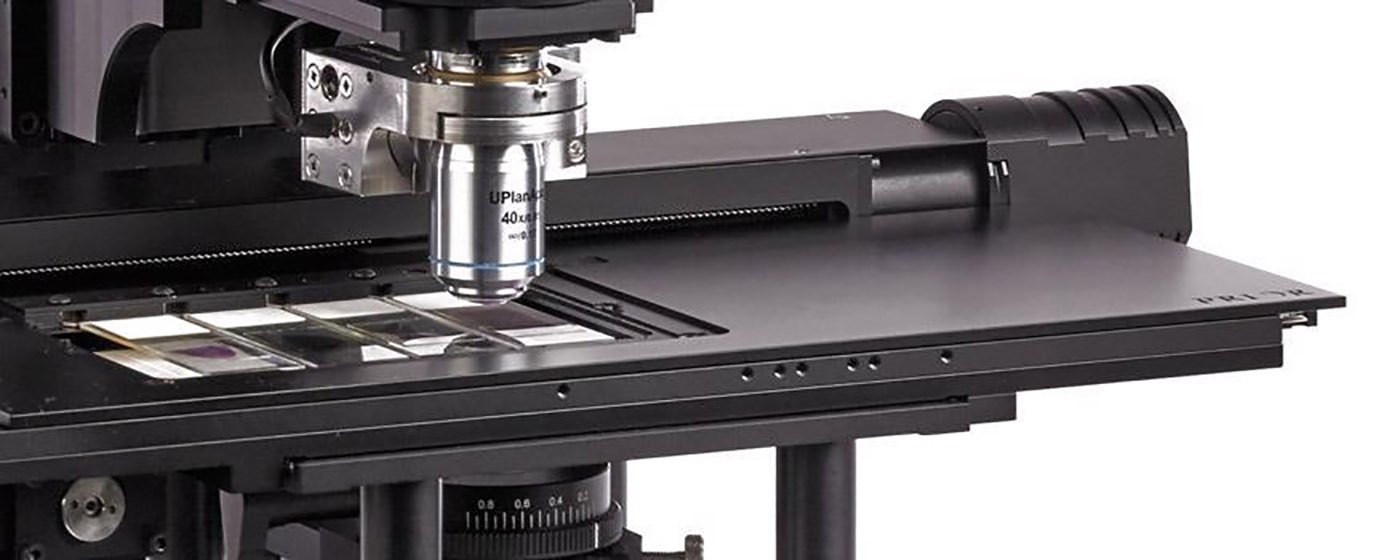
Ultra-Compact Miniature XY Stage for Optical Microscopy Integration
Challenge: A European medical imaging OEM was developing a new generation automated slide scanning microscope with an aggressive size reduction target. The standard 60×60mm XY stage footprint was approximately 40% too large to fit within the revised chassis design. The customer had evaluated three catalog suppliers and found no suitable option.
NATSU Solution: We designed a custom 36×36mm XY stage with a 15mm travel in each axis, 0.5µm bidirectional repeatability, and an integrated cable bundle exiting from the rear face. The miniaturized crossed-roller guide system maintained stiffness comparable to larger standard units. Prototype delivery was achieved in 22 working days. Volume production of 150 units per quarter was subsequently established.
Outcome: The customer achieved their size target without performance compromise, enabling on-schedule product launch. Total integration time was reduced by an estimated 60% compared to adapter-fitting a standard stage.
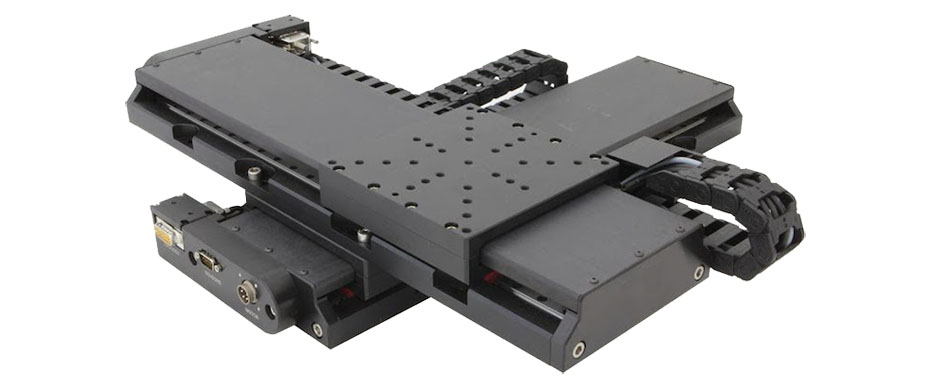
5-Axis Non-Standard Precision Platform for Semiconductor Wafer Inspection
Challenge: A semiconductor equipment integrator required a combined XYZ + tip-tilt platform to position a 300mm wafer holder during photolithographic inspection. The combined payload exceeded 8kg, the XY travel required 250mm × 250mm (non-standard), the Z axis needed 20mm travel with sub-100nm positional stability, and the tip-tilt range was ±5° with 0.1 arcsecond resolution. No catalog combination came close to meeting these simultaneous requirements.
NATSU Solution: We developed a purpose-engineered 5-axis integrated platform with air-bearing XY axes for the primary travel, a high-stiffness Z column, and a compact piezo-driven tip-tilt module mounted concentrically. All cable management was integrated into the base frame with a single 42-pin connector exit. FEA-validated structural design ensured sub-50nm stage vibration at the tool tip.
Outcome: The platform passed full metrology acceptance testing on the first prototype iteration. Volume supply of 12 units per year was established with guaranteed 6-week delivery lead time per batch.
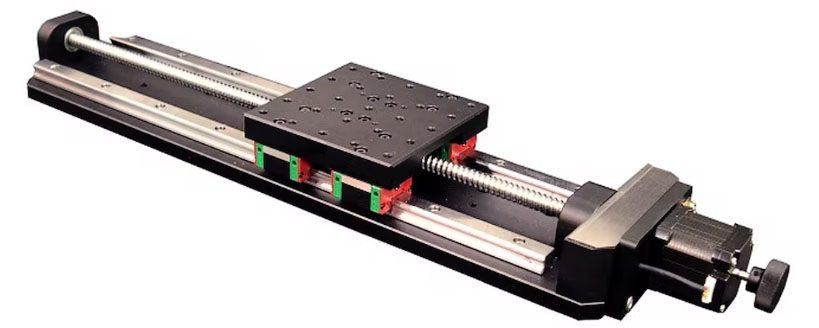
ISO Class 5 Cleanroom Linear Stage for Biomedical Automation
Challenge: A biomedical automation systems integrator needed a 200mm travel linear stage for liquid handling operations inside a Class 5 cleanroom enclosure. Standard stages used lubricants incompatible with the particle emission requirements.
NATSU Solution: Custom stage with PFPE-lubricated linear guide, sealed motor housing, cleanroom-grade cable jacketing, and anodized aluminum construction. Met ISO 14644-1 Class 5 particle emission requirements in independent testing.

Large-Format Custom Gantry Stage for Laser Processing
Challenge: A laser systems manufacturer required a gantry stage with 800mm × 600mm travel, ±2µm path accuracy, and cable routing designed to prevent interference with the laser beam path. No standard gantry offered this travel combination with the required accuracy class.
NATSU Solution: Custom dual-drive gantry with active yaw correction, integrated beam clearance zone, and sub-system validated accuracy of ±1.8µm at all points across the full travel envelope. Delivered in 35 working days.
Custom Rotary + Linear Coaxial Assembly for Fiber Alignment
Challenge: A photonics component manufacturer needed a combined rotary + linear coaxial stage for automated fiber alignment, with the rotary and linear axes sharing a common centerline to within 5µm, and overall height under 60mm. No standard rotary/linear combination met both constraints simultaneously.
NATSU Solution: Coaxial custom design with integrated hollow-shaft rotary and central linear slider. 58mm total assembly height, 5µm coaxiality certified by CMM measurement report included with each unit.
Custom Project Delivery Cycles: What to Expect
Delivery timelines for custom precision stages depend on complexity, quantity, and the specificity of requirements. Here is a realistic guide to what NATSU delivers at each project phase.
Our Competitive Advantages in Custom Stage Engineering
⚙ In-House Rail Production Capability
Unlike most stage assemblers who source linear guide rails from third parties, NATSU has years of direct experience in precision linear guide rail manufacturing. This vertical integration gives us unmatched control over the most critical precision component in any stage — enabling faster prototyping, tighter tolerance control, and cost advantages that we pass directly to custom project customers.
🌎 World-Class Engineering Team
Our product development team includes engineers with international backgrounds and academic credentials from leading institutions. This depth of talent enables us to handle genuinely complex custom requirements — from air-bearing custom designs to piezo-integrated nanopositioning platforms — that many suppliers decline to quote.
📞 Dedicated Project Engineering Support
Every custom project is assigned a dedicated project engineer who serves as the single point of contact from requirements capture through production. This eliminates communication gaps that commonly delay custom projects and ensures that your specific constraints are never lost in translation between sales, design, and manufacturing teams.
📋 Comprehensive Documentation & Metrology
Every custom stage ships with a complete documentation package: approved engineering drawings, dimensional inspection report, performance test data (accuracy, repeatability, velocity uniformity), material certifications where required, and interface pinout documentation. This documentation package significantly accelerates your system qualification and regulatory submission processes.
⏱ Fast Delivery Pipeline
Our streamlined custom development pipeline — anchored by in-house rail production, pre-qualified component suppliers, and efficient design review processes — achieves prototype delivery in 15–30 working days for the majority of custom projects. This is typically 40–60% faster than comparable Western suppliers, which is critical for equipment teams operating on tight development schedules.
🏆 Proven Quality Management
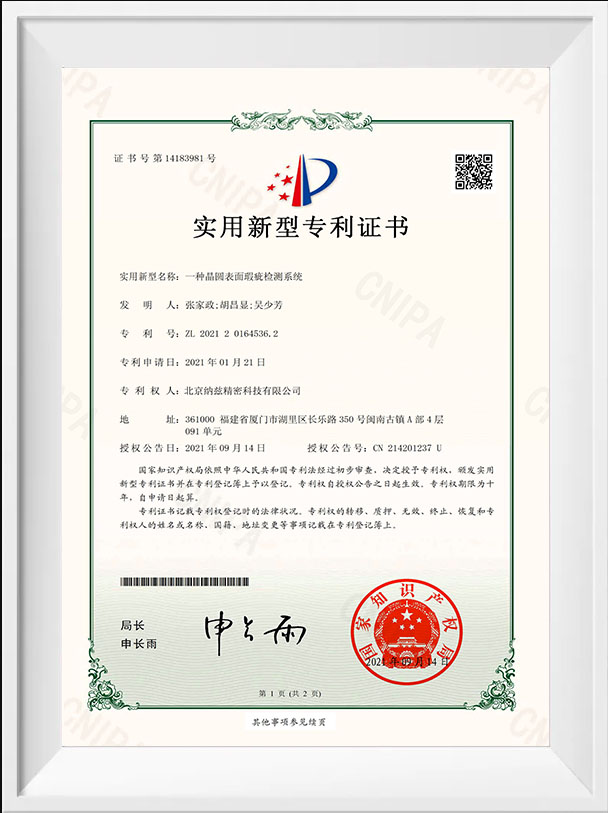
Our quality management system encompasses incoming material inspection, in-process dimensional control, and final performance verification for every unit. National patents and software copyrights cover key technologies within our precision displacement platform portfolio. We continuously strengthen technological innovation as the core of our development strategy.
Your Precision Engineering Partner Since 2018
NATSU PRECISION TRADE LIMITED was established in 2018 with a singular mission: to build a product line defined by high quality and innovative technology. Since our founding, we have established deep cooperative relationships with leading international brands and built a customer base spanning more than 40 countries worldwide.
Our product line covers the full spectrum of precision motion requirements: linear stages, multi-axis stages, air bearing stages, gantry stages, piezoelectric platforms, rotating platforms, and integrated motion systems. Our controllers and drivers and optical encoders complete the system offering.
Applications we serve include optical microscopy, laser interferometry, semiconductor fabrication and inspection, life science automation, precision manufacturing, fiber optic alignment, astronomy instrumentation, data storage technology, and many others. Our commitment is to provide customers with the most accurate displacement devices available — from sub-nanometer capacitive position sensing systems to high-throughput production-grade linear motor stages.
Our enterprise purpose: "Survive by quality, develop by innovation." We adhere to industry breakthrough as our leading development strategy, continuously strengthening technological innovation, management innovation, and marketing innovation as the core of our innovation system — with the goal of becoming a leader in the automation motion systems field.
- Established 2018 — Global Precision Motion Leader
- In-House Rail Manufacturing — Precision at the Source
- National Patents & Software Copyright Holders
- 40+ Countries — Pre-sale, In-sale & After-sales Support
- World-class R&D including international engineers
Make the Right Choice: Optimize Cost & Timeline
The fundamental decision between standard and custom precision positioning stages is not about prestige or technical complexity for its own sake — it is about optimizing your project's total cost, development timeline, and integration risk. Standard stages are the right answer when your requirements fit the catalog. When they do not — and in high-end equipment development, they often do not — custom stages are not an expensive indulgence but a rational engineering decision that frequently reduces total project cost by eliminating integration rework, schedule delays, and the performance compromises that come from forcing a standard product to do a non-standard job.
NATSU PRECISION's combination of in-house rail manufacturing capability, an experienced international engineering team, a proven 6-step custom workflow, and a track record of 30-day prototype delivery gives your R&D and procurement teams a reliable, fast, and technically rigorous partner for any custom precision stage requirement. Whether you are early in requirements definition or ready to issue a purchase order, we are ready to engage at whatever stage of the project is most useful to you.
Full Precision Motion Product Portfolio
Linear Stages
High-precision motorized linear translation stages for all performance classes.
Multi-Axis Stages
XY, XYZ, and complex multi-degree-of-freedom positioning platforms.
Air Bearing Stages
Frictionless air-bearing motion for ultra-high precision and clean environments.
Gantry Stages
Large-format gantry positioning systems for industrial and research applications.
Fast Steering Mirrors
High-bandwidth beam steering for laser and optical systems.
Precision Motors
Linear motors, servo motors, and direct drive solutions.
Controllers & Drivers
Motion controllers and amplifiers for single and multi-axis systems.
Vibration Isolators
Active and passive vibration isolation for sensitive precision instruments.